 Royal ceremony for a prince.

There is much to celebrate in the musical “Emir” but it isn't quite the exhilirating cinema that we expected from director Chito Rono. The narrative sweeps like an epic and the production is grand, enough to impress . Yes, I am impressed! For once, there is a local film project that doesn’t scrape bottom like 80% of the Filipino film output. But is it a benchmark for an excellent film? Does it offer seamless story telling? Are the performances sincere and affecting? Hmm, close. But not quite!
The film chronicles the story of Amelia, played like second skin by newbie Frenchescka Farr. Amelia is a wide eyed dreamer who agonizes over the stark poverty of life in Ilocos. This is shown in a vignette of over-the-top musical scenes that involve a dreaded rat infestation at a night field of corn, as well as the desperate albeit hopeful goodbyes of migrating people. When wind blows off a bill of money, Amelia scampers off to fetch it – then the movie magically uproots her to the arid, exotic landscape of an emirate country. I was literally gasping as the Arabic architecture comes to the fore. Suddenly, you are rudely slapped with the realization of unease. We are transported to a foreign land. This isn’t an abode where you comfortably lie down your bed dreaming of dreams. This is the tortuous road to the better life. Or is it?
Amelia finds herself working at a royal household. What makes life doubly hard is her company of catty co-workers. There is enough internal politicizing among the bevy of domestic helps to encourage flying off to Venus! But her sincerity, good heart and strength of character soon land her the prized position to be the newborn prince’s nanny. And we all know how this carries enough influence and power. The king's coddler is a king in waiting. However, our saintly heroine remains unassuming, soft spoken, and unfazed by her position in the hierarchy of things. But there is an impending trouble ahead – the threat of war! Will she find her rightful place in the sun?
 Amiable Liesl Batucan (center) and overeager Melanie Dujunco (right).
Frenchescka Farr astounds us! Her plain countenance is unintimidating. She is a believable representative to the faceless thousands who wind up as subservient “maids” all over the world. More importantly, she comes off with a stirring performance reminiscent of some of Philippine cinema’s greatest heroines. Her vocal work is emotive; her masterful singing highlighting every scene. Ms. Farr single handedly carries the weight of this film on her shoulder. Otherwise, the story tends to waver to a decidedly mainstream sensibility. Parang “komiks”. A lot of the characters are caricaturish, mostly brought about by how the supporting characters envisioned their roles.
For example, let’s take Dulce, who plays Ester - the mayordoma. In the movie’s first half, her depiction of authority is one of plain bad attitude! When she reprimands, she cowers with dagger eyes. Nanlilisik ang mata! Authority should be respectable. It should command a degree of grace, not horror! Her characterization grates so much so that when she falls off sick, then turns over her mayordoma uniform to Amelia, we were puzzled by her 180 degree turn as she duets “Di Ko Pinangarap” with Amelia. Dulce does well in this latter part where she was packing to leave. In fact, I have read several comments online saying that Dulce’s performance merits an award. I beg to disagree. You don’t give an award to a singular moment inconsistent with the rest of a characterization, more so a caricature.
Now let me take the spotlight to the characters that annoyed me no end. Two names – Melanie Dujunco (who plays Mylene) and Beverly Salviejo (who plays Diday), both decending into their versions of Grizabella and the Witches of Emir! As part of the household, these two depicted distracting characterization, playing their parts like this was going to be their Famas or Star Awards trophy! Trouble is, they seem to have forgotten that good acting isn’t meant to upstage other actors. They stick out like sore thumbs! It was like being part of a chorale where a member works exceedingly hard to stick out instead of blend in!
Isn’t Dujunco an old hand in the theater and chorale scene? Hasn’t she learned from her long experience that less is more? That harmony bears a more pleasant existence? Or maybe she actually believed that she was going to take over Frenchescka’s place if she kept upstaging her co-stars? LOL. It does beg these questions! Then there’s Beverly Salviejo who needed reminding that despite being a “movie musical”, Emir's pervading theme is serious! This is not “Yaya at Angelina”, “Kimi Dora” nor “Zsa zsa Zaturnah” where comic characters are requisite. What an annoying bunch. With all their experience in the business, they have resorted to excessively calling attention to themselves. There are no small roles for good actors, but there's no role big enough for bad! Goes to show why they have remained forgettable players in the biz.
Kalila Aguilos plays Tersing, the long suffering moneybag to a philandering husband, and she shines in several of her scenes. Aguilos displays a sense of reverence to an adequately fleshed out character, allowing her to sparkle proudly beside the ever-endearing Frenchescka. Their duet “O Maliwanag na Buwan” (which boasts of Tagalog-Ilocano lyrics) makes for a magical cinematic moment! Something that can’t be said of Francheska’s duet with Sid Lucero, the Arab-Pinoy mestizo who steals Amelia’s affection. Their “Buti Na Lang” duet – a richly melodic song - could have been another special moment, but Sid’s voice – though serviceable and can definitely carry a tune – is too tentative for us to enjoy. He seemed vocally shy, almost whispery, while Frenchescka’s was conspicuously self assured.

The lineup of songs is a mixed bag. Some are affecting, others mere noise. Consider “Di Uubra Dito” when the whole household launches into a Bollywood-style song and dance. There was judicious use of crane to showcase this ambitious number. Unfortunately, the exchanges (a duel of sorts between the Pinay maids and the Sri Lankan staff) were mere clutter. A chaotic mess! To compare this to a standard Bollywood fare is a big injustice to India's quotient for musical entertainment. Those who say that this compares of equal gravity to a Bollywood staple needs to watch more Indian flicks! They obviously do not know what they are talking about.
“Gusto Mo Bang Mangibang Bayan” is more successful in terms of pomp and the extravagance of choreography, although it felt too stagey. “Pesteng Salot” is brilliantly pieced together – the fore as well as the immediate background of corn field luminously lit in the night. Unfortunately, the songs comes off like a tepid warning – loudly orchestrated, melodically offkilter. “Sandosenang Taon, Sandosenang Pasko” is festive and bittersweet, while ”Alilang Jetsetter” is playful enough to compel us to sit through a bad montage.
“Di Masabi” could have been a sweet number, but Jhong Hilario’s pipes are a little wanting, leaving us unsatisfied. I have to say that "Di Masabi" is a Gary Granada song published and released years ago. In fact, this is even sung at some parties or karaoke events. It wasn't written for "Emir". This bucks the claim that songs from the movie were all originally written for this project. “Ba’t Ako Naririto” is an anthemic song that beautifully weaves the whole narrative string together, and once again, Frenchescka completely owns it up, and breathes life into what would be an OFW’s theme song. The fragmented quality of these songs owe it to the different composers who contributed for the movie.
When the narrative zeroes in on Amelia’s relationship with her royal ward, I sit up and watch intently. There was excellent choice for the 12 year old Ahmed – perfectly played by Mahdi Yadzian Varjani. He is princely - and he commands a captivating presence, especially when he speaks his smattering of Tagalog: “Ayoko, di ako nauuhaw”; "Sana, hanapin na tayo ni Daddy” or “Pwede po ako maglaro?” It tugs heart strings hearing them from a foreign tongue. Unfortunately, their yaya-alaga relationship is underdeveloped, even when we find them scampering for safety during the siege of the palace - or when they eventually got lost in the Moroccan desert.
 Mahdi Yadzian Varjani: perfect choice, charismatic neophyte.
The film offers scintillating photography of north Africa (Marrakesh) as well as the Ilocos region, and this excellent camera work helps us bridge gaps in a loopy story. When Amelia and Ahmed were on the run at the treacherous deserts, the Sheik ordered his people to seize and rescue the boy. Weren’t the rescuers told that the boy was under the tutelage of a faithful servant? How dare they leave Amelia alone in the desert when they could have rescued both since the bad guys were not in sight. Twelve years of loyal service – and she is left to desiccate in the harsh desert, rudely left to wonder whatever happened to her “alaga”. Napaka inutil naman yata ng employers na ito not to consider a loyal servant's security. We couldn't help but question the pretense of affection when the Prince decides to visit his yaya one day in the future. No letters, no official news. Just fast resolutions.
Otherwise, there would be a less dramatic arc to conclude it, right? We do love happy endings, but happy endings don't make real stories. We also admit to shedding a tear when Ahmed is found alighting from his limo in far Ilocos to call the attention of an older “Yaya!” It’s the melodramatic soul in us. But when I got back to my car, it felt like a Star Cinema production. Mainstream storylines with fast resolutions and happy endings.

I respect the itinerant Pinoy. It isn’t easy to leave your country and live the life of a 3rd class citizen for the sake of a hungry family back home. But I feel that it is unfair to think less of the Pinoys who opt to stay in this country. Are we really less of a hero for staying on with the “sinking ship”? Are we less noble for not enduring the lonely life overseas? Our concept of what's a modern-day hero is an obvious departure from the world’s concept of courage, fortitude, nobility. Heroes stay on to persevere. Heroes think of the common good, not a limited subset of people.
 Choreographic clutter.
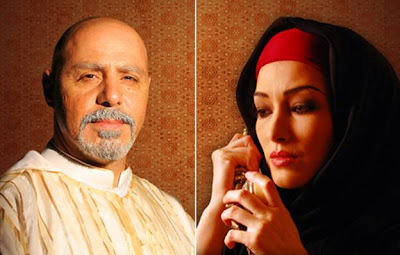 Sheik who would be king and his wife.

Finding Ahmed.


 P.S. "Bulong" is rated B by those droll trolls at the Cinema Evaluations Board (C.E.B.), some of the most enterprising group of individuals in the land who patronize their friends more than great movies.


